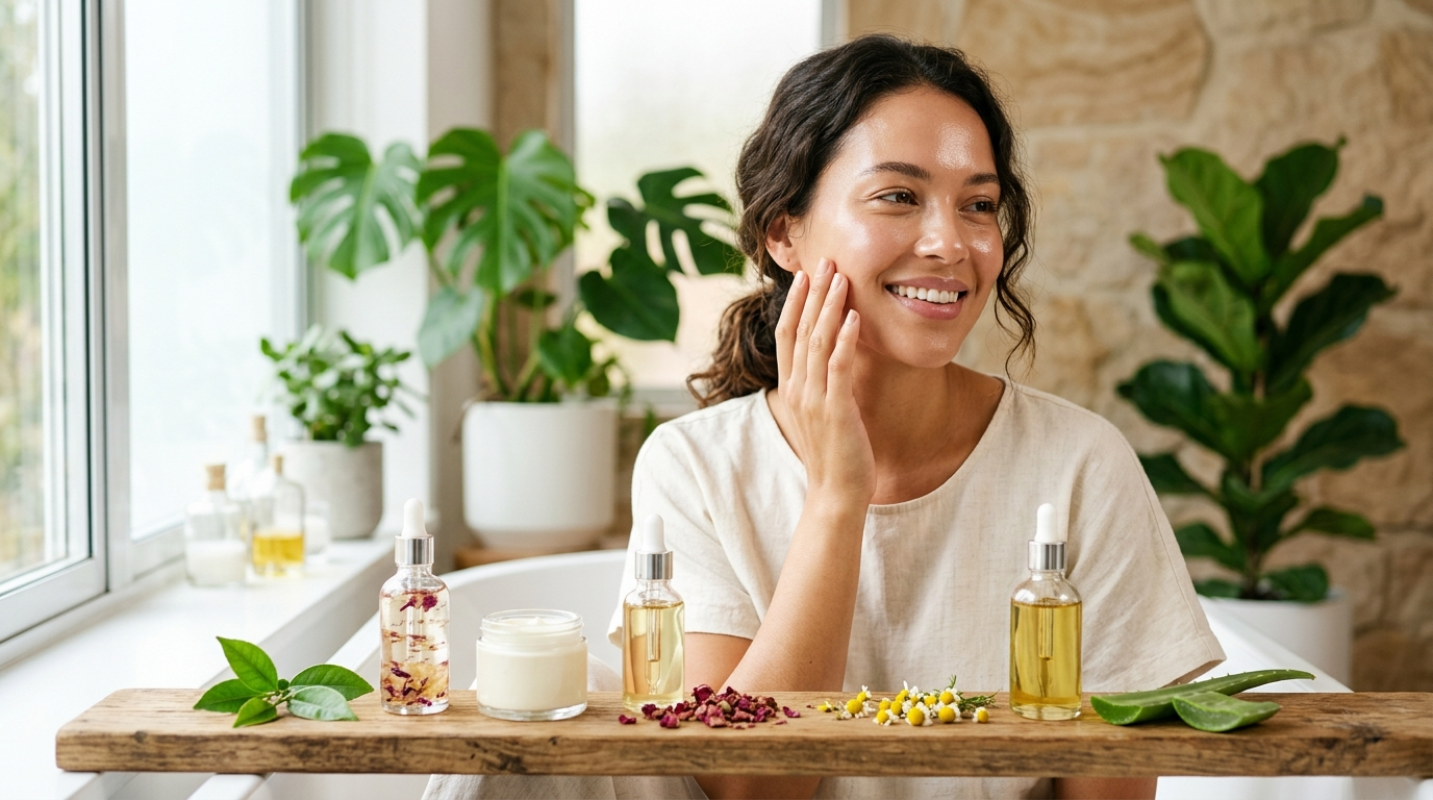
 (Image source: Gemini)
 As we move through 2026, the conversation has shifted entirely toward what experts call the Barrier-First Revolution. We finally realized that nuking our skin with high-percentage acids and aggressive peels is a losing game. Why? Because the data shows we're more sensitive than ever. According to the Aveeno 2024 State of Skin Sensitivity Report, a staggering 71% of people globally now report having sensitive skin. That's a 55% jump over the last two decades. So how do you get those "glass skin" results without turning your face into a construction site? It's about choosing ingredients that offer functional restoration. You want products that deliver high-performance results while actively strengthening your protective shield. It's time to stop the cycle of "peel and reveal" and start focusing on "nourish and flourish."
Retinoid Alternatives and Low-Dose Actives
If you've ever tried traditional retinol and ended up with "retinol burn," you know the struggle. It's the gold standard for anti-aging, but it can be a nightmare for sensitive types. That's why Bakuchiol has become such a massive star in the last couple of years.
Bakuchiol is a plant-based alternative that mimics the way retinol works without the drama. Recent clinical trials confirm that 1% Bakuchiol delivers results comparable to 0.5% Retinol for smoothing fine lines and evening out pigment.¹ The best part? Users report 67% fewer instances of stinging, peeling, or redness.¹ It's the perfect "slow and steady" approach that actually wins the race.
If you aren't ready to give up on vitamin A entirely, look for Retinal (Retinaldehyde). It's often described as the bridge between over-the-counter retinol and prescription-strength stuff. It's about 11 times faster than standard retinol because it only needs one conversion step to become active on your skin. Because it's so efficient, you can use a lower, gentler concentration and still see massive changes in your skin texture.
Hyaluronic Acid and Ceramides
Think of your skin cells like bricks and your skin barrier like the mortar or grout holding them together. When that grout is cracked, moisture escapes and irritants get in. This is where ceramides come into play. They are the "grout" of your skin.
In 2026, we're seeing advanced formulations using multivesicular emulsion (MVE) technology. This fancy term basically means the ceramides are released slowly over 24 hours, rather than all at once. This constant drip-feed of hydration significantly reduces transepidermal water loss. When your barrier is solid, every other ingredient you apply works better because your skin isn't constantly in "emergency repair" mode.
Then there's the hydration king, Hyaluronic Acid. Although it's a classic, many people are now switching to Beta-Glucan. Emerging research shows that Beta-Glucan is actually 20% more hydrating than Hyaluronic Acid. It also provides an extra layer of soothing for a compromised barrier.
Safe Alternatives to Hydroquinone
We all want that lit-from-within glow, but aggressive brightening agents can often cause more harm than good. This is especially true now that pollution is at an all-time high. Recent studies show that even a small increase in particulate matter in the air is linked to a 20% rise in pigment spots. You need protection, not just correction.
Niacinamide (Vitamin B3) is the undisputed multi-tasking champion here. About 79% of dermatologists rate it as a top ingredient for dark spots, and 72% love it for reducing redness. It's one of the few ingredients that can help fade hyperpigmentation while simultaneously increasing your skin's natural ceramide production. It's the ultimate "do no harm" active.
For those dealing with stubborn sun spots, Alpha Arbutin and Kojic Acid are the way to go. They work by inhibiting the enzymes that produce pigment, but they do it much more gently than old-school bleaching agents like hydroquinone. When you pair these with a stable Vitamin C derivative like THD Ascorbate, you get the brightening benefits without the irritation or the weird metallic smell of traditional L-ascorbic acid.
Barrier-Safe Balance
Finding the right balance is easier when you know which products are leading the charge in "functional restoration." Here are some of the current favorites that dermatologists are reaching for.
- Peptides: Rhode Peptide Glazing Fluid. This provides an immediate barrier glow while using signal peptides to firm the skin over time.²
- Retinal: Medik8 Crystal Retinal. This is the go-to for high-speed results for acne and aging without the typical retinol burn.
- Ceramides: Alpyn Barrier Repair Cream. A great choice for extreme sensitivity, using wild-harvested plants and ceramides to lock in moisture.
- Niacinamide: La Roche-Posay Toleriane Double Repair. It combines prebiotic thermal water with Vitamin B3 for 48-hour hydration.
- Bakuchiol: Isdin Melatonik. A night serum that repairs oxidative stress while you sleep without causing any peeling.¹
The Importance of pH and Formulation Integrity
Have you ever wondered why a 20% Vitamin C serum from one brand makes you break out while a 10% serum from another works perfectly? It usually comes down to pH and teamwork. A higher percentage of an active ingredient doesn't always mean better results. In fact, it often just means more irritation.
Skincare in 2026 is moving toward "Skinimalism 2.0." This means using multi-functional products rather than a 10-step routine. When a single moisturizer contains SPF, peptides, and antioxidants, it's formulated to make sure those ingredients play nice together. This reduces the risk of a "chemical cocktail" reaction on your face.
You should also keep an eye on your skin's microbiome. We're learning that a balanced community of "good bacteria" on your skin can reduce acne and eczema flare-ups by up to 30%. Ingredients like prebiotics and probiotics are becoming staples because they help your skin defend itself. If your skin's pH is off, that microbiome suffers, leading to that "tight" feeling we all hate.
Building a Sustainable Long-Term Routine
The most important thing to remember is that skincare is a marathon, not a sprint. We've moved away from the "anti-aging" mindset and into the era of "skin longevity." The goal is to keep your cells functioning like they're younger for longer, rather than just sandblasting the surface to hide wrinkles.
Consistency will always beat intensity. Using a gentle 1% Bakuchiol serum every night for three months will give you much better (and safer) results than using a harsh peel once every two weeks that leaves your skin raw. If you're ever in doubt, or if your skin is reacting to everything you put on it, that's your sign to scale back to the basics: a gentle cleanser, a ceramide-rich moisturizer, and a solid SPF.
Skincare shouldn't be a source of stress or physical pain. By choosing ingredients that mimic your skin's natural chemistry and supporting your barrier, you can achieve that glowing, healthy complexion you're after. You don't have to choose between results and health. You can absolutely have both.
This article on genvora is for informational and educational purposes only. Readers are encouraged to consult qualified professionals and verify details with official sources before making decisions. This content does not constitute professional advice.